
Builder energy is back.
After a 2010s decade lost to grind culture, SaaS and crypto, both Peter and Dave describe a 1990s-style return of joy in making things: own your hardware, hack on the thing, build because it's fun again.
PRIVATE FIRESIDE · GITHUB HQ · AFTER HOURS
Builder Energy Is Back.
One night, three builders, and the open-source project rewiring how software gets made. The creator of OpenClaw, the investor backing its Foundation, and a Microsoft VP walk through why this moment feels like the early web all over again.
the gistTucked inside GitHub HQ, under the glow of the cyan Octocat and a live counter ticking past five million GitHub events, three people sat down to talk about the thing everyone in the room had already fallen for: OpenClaw — the open-source agent project that, in a matter of weeks, brought a 1990s kind of builder energy roaring back.
This is the recap for everyone who wasn't in the room.

Creator of OpenClaw
The engineer behind PSPDFKit, now building the open-source project — and the foundation under it — that kicked off the agentic-builder revival.
@steipete →
Investor · OpenClaw Foundation
Built Facebook Connect and Path. Now helping steward the OpenClaw Foundation and keep the project independent and open.
@davemorin →
Moderator · Microsoft CVP
Corporate VP at Microsoft on Microsoft Scout, the OpenClaw-powered work assistant announced at Build. Asked the 400-level questions.
@OmarShahine →Seven things the people who weren't in the room actually wanted.
After a 2010s decade lost to grind culture, SaaS and crypto, both Peter and Dave describe a 1990s-style return of joy in making things: own your hardware, hack on the thing, build because it's fun again.
Dave's first reaction to OpenClaw. Not a thin wrapper the models will swallow, but a real substrate you can build entire companies — and lives — on top of for a decade.
If agents are the new websites, the framework just shipped. Dave thinks the agent era could be as big as apps on the iPhone, or the web itself — "way bigger than the late nineties."
Peter's thesis: the bottleneck isn't model quality anymore. "Even if the models would not get any better, we could change the world for the next five to ten years easily" — just by building cleverly with what's already here.
A nonprofit to keep OpenClaw maintained, engineered and independent of any single sponsor — plus a second mission: change the narrative around AI by showing people they can build with it, not just chat. Backers already include the University of Michigan and Mount Sinai.
Facebook's developer platform took a year to reach a million developers. Dave says OpenClaw hit comparable scale in about two weeks.
You can automate almost everything except taste and thoughtful design. Adding people doesn't automatically make things faster — attention is the real constraint.
"I think you found the Linux of AI."
— Dave Morin
"The main limiting factor right now is imagination."
— Peter Steinberger
"If you think making a company is hard, try to make a nonprofit. That's company hard mode."
— Peter Steinberger
"Now all of a sudden you can speak English and anyone can make things."
— Dave Morin
"It's high agency, man."
— the maintainer-community welcome
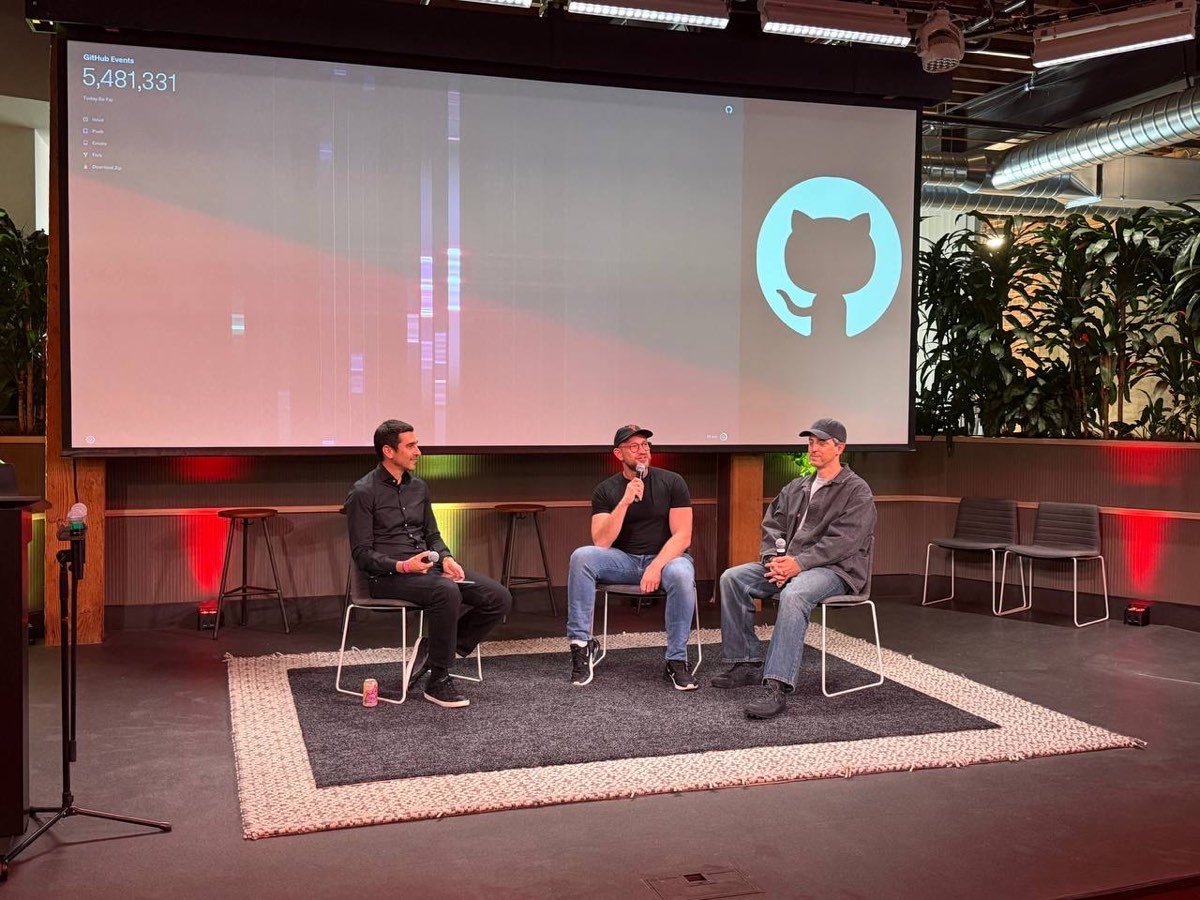
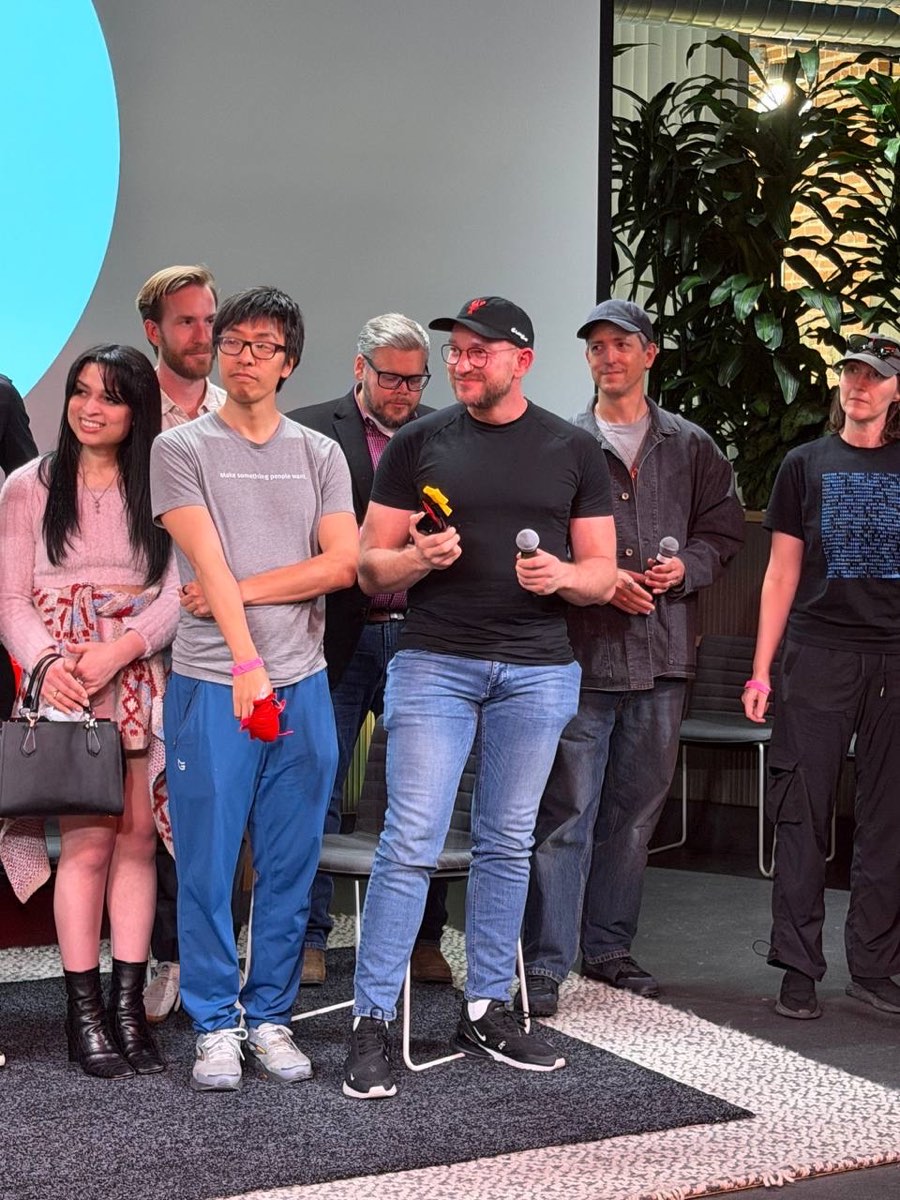
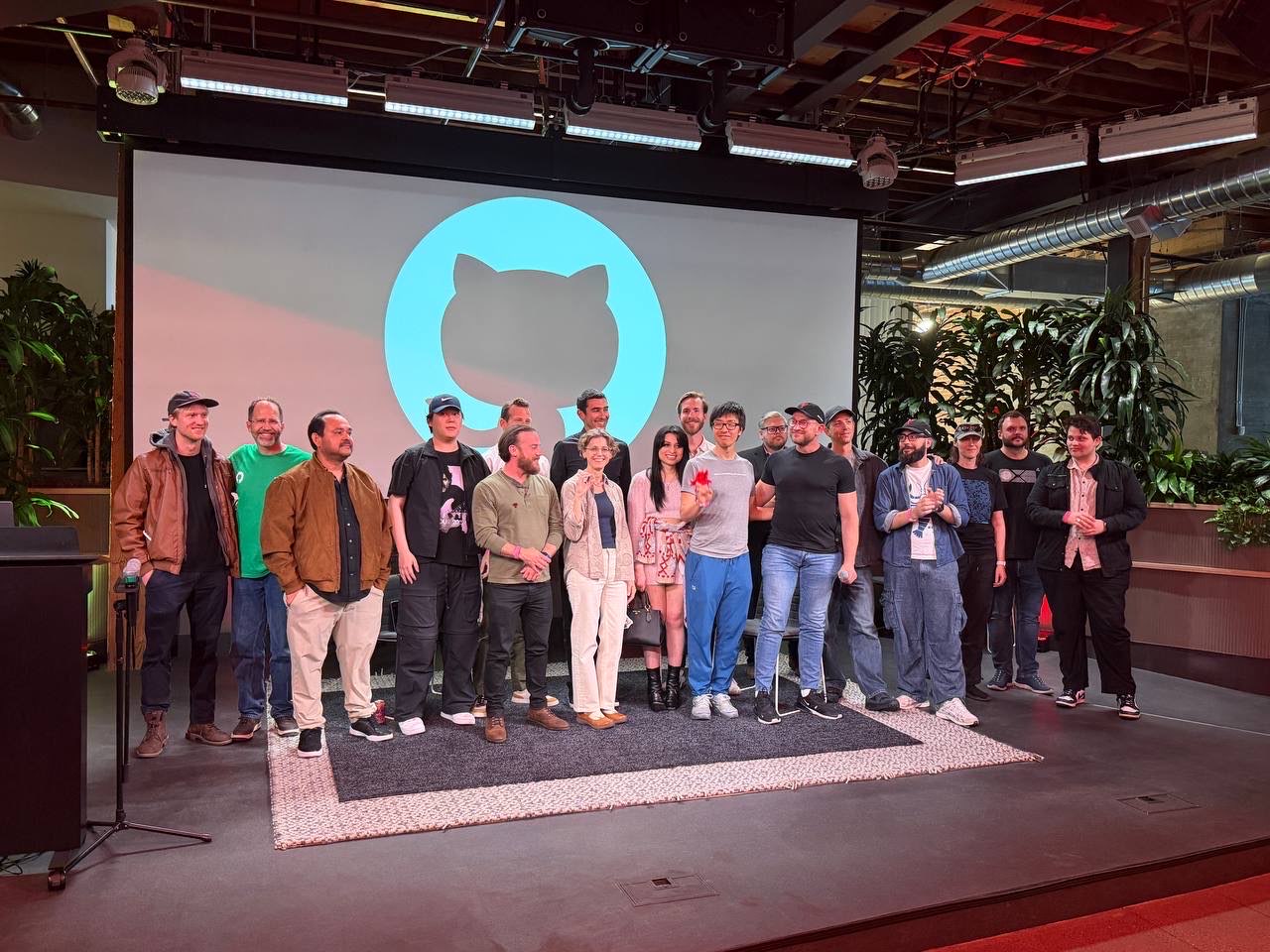
THE FULL RECORD · UNCUT · ON THIS PAGE
The whole fireside, lightly cleaned up and kept exactly here — no PDF, no link-out, no separate page. Pull up a chair.
Omar Hi everybody, welcome. My name is Omar Shahine, I'm a Corporate Vice President at Microsoft on Microsoft Scout, which we announced yesterday at Build. It's our new OpenClaw-powered work assistant, which I'm super excited to bring to the market. I'm very pleased to introduce Peter and Dave. Thanks for being here. And I have 34% battery life to ask you all these questions.
Omar So first, a little story. I've crossed paths with these two in interesting ways. I was a customer of Peter back in 2012 when we licensed PSPDFKit at Microsoft to power our PDF rendering for the OneDrive mobile apps, and I was super impressed. He's just a builder, an amazing engineer. So when OpenClaw popped up, I was like, ooh, I'm going to go check that out. And then Dave built amazing things. Path was a social network that was super awesome; my wife and I used it back in the day to share pictures with each other. And then Facebook Connect, which many of you may know, is one of the most explosive developer platforms ever built. So to have this opportunity to spend time with these people in these new roles is a privilege.
Omar Peter, you've done a lot of podcasts and I've listened to every single one. So this is going to be a 400-level Q&A.
Peter You listened to all three and a half hours?
Omar Yeah, all of them. All right, let's get started. I'm super curious about how the two of you got connected.
Peter Oh, that's a great story. I did not expect that OpenClaw would create all of this. And honestly that's the thing I'm most proud of — having a little bit of this old builder energy back, the kind that was there 20 years ago when people were excited about the internet. Suddenly it almost feels like the nineties again: people are excited about building something themselves, owning the thing, buying their own hardware that they can reuse. That's really what I wanted to achieve as a project. You own the thing, you hack on the thing.
Peter Reminder: for the first two months, the only way to install OpenClaw was git clone, pnpm, build, and then gateway run. That was the installation method. Got me a lot of PRs. And then basically overnight, everything exploded. My phone number leaked online, people were calling me. Some folks figured out that if you call someone often enough, the iPhone thinks there's an emergency and rings even in sleep mode. I did not know that. My Twitter DMs, you scroll down and at some point it just bugs out. But luckily, Dave was in my DMs. I'm like, who is this guy? But he seemed interesting, and he was trying to push me to do something I didn't want to do. Then we had a call, in the middle of the night for me. I could feel that he was claw-pilled. I kept in touch, the stars aligned, and I felt he was a good one.
Peter He helped me a lot with — oh my God — all the legal stuff on the Foundation. If you think making a company is hard, try to make a nonprofit. That's company hard mode. Everything is more complicated; just getting a bank account, especially as an alien of extraordinary ability, is very challenging. But it was important to get the structure right, so even if I hand my time to someone else, the project stays independent. We actually got some nice donations, we could hire people, and things are going in very exciting ways. I get some sleep again.
Omar And Dave, why did you reach out to Peter?
Dave When I was seven years old, my grandfather put a Macintosh Plus on my desk, and I fell in love with this idea of the computer. I started building things with HyperCard and AppleScript, and it was this feeling that I could create anything. Then I went on — I worked at Apple, I worked at Facebook, I built that developer platform, and then I built Path. All along the way I've been chasing this feeling of being able to create something myself.
Dave And like Peter said, for the last 10 years the valley kind of felt like the builder energy was lost in crypto and SaaS — things where business became the conversation happening in all these buildings around town. A friend of mine, an old hacker friend from the nineties, reached out to me when I was home over the holidays in Montana, where I grew up. He said, you should install this OpenClaw thing. I was like, I don't have time, I'm busy with my family. But I decided to install it the next day, and within 24 hours that feeling I had when I was seven was back. I was like, I have to meet the creator of this. Not only does this have to be protected, but we have to get this to everybody in the world.
Dave I started making more things with it than I had in a really long time — not because I didn't want to before, but because there's something about the speed now that keeps up with your creativity. For whatever reason, it fit my brain. So I reached out to Peter and just said, I love this, and we have to protect it and make sure the community is protected over the long term. That's been the conversation ever since, and we've ended up in a bunch of strange countries together, everywhere from Tokyo to all over the world.
Dave When I was building the Facebook platform, we had an enormous explosion of developer activity. It took us a year to reach a million developers. This time, I think that happened in two weeks. So we've been trying to keep up with it. A lot of work, a lot of phone calls between Peter and me where he was asking to sleep more. And doing this nonprofit has been entrepreneurship on expert mode. We've made a lot of progress, so I'm excited to talk to you all about it.
Omar I love that story, and HyperCard was awesome. So, Dave, a question for you. When you look at OpenClaw as an investor and ecosystem builder, what told you this was more important than just a developer tool? How do you get the whole world to pay attention to something as powerful and magical as OpenClaw?
Dave One of the first times Peter called me, there was a bunch of really intense stuff going on, he had a lot of people coming at him, and I remember saying to him, I think you found the Linux of AI. I really felt that way. We'd all experienced these other AI systems — ChatGPT, Claude, whatever — and none of them really felt like something you could build on top of: not just a thin shim to customize, but where you could take the entire thing and build something substantial on top of it. And not only could you do that, there were core components you could tinker with that Peter so thoughtfully designed.
Dave I receive a lot of pitches. I've invested in over a thousand companies over the last 20 years, and there was nothing in AI like this. There was a lot of "let's build a vertical version of this thing on top of the model," but then the models would eat that entire category of startup. Everybody in the investor community was asking, how do we even invest in applications on top of this? OpenClaw was the first time I could see ten years and beyond of entire companies, entire people's lives, dedicated to building things on top of it. Maybe we're in 1997 and the web was just invented, and agents are kind of like websites, and we've got the framework now. If we can make this the platform people build agents on top of for a million or a billion different reasons, that could be very powerful.
Omar Awesome, thank you. Peter, I want to ask you about scale. OpenClaw had a huge amount of demand in a super short time. What did the last few weeks teach you about scale, and specifically about community and expectations?
Peter That's a good question. 400-level. The biggest issue with scale is still people, attention. You can automate so many things, but you cannot really automate taste or thoughtful design. The other thing is, you can add more people to the project, but it doesn't automatically mean things go faster. It's a lesson we've heard so many times, but I'm humbly reminded of it every time I try.
Peter The meta level of OpenClaw I find incredibly interesting because we're hitting so many issues. I have a Slack channel now with the GitHub folks where I can ask them to press the button — and pressing the button means resetting my rate limits. At some point we automated that with an agent and got into big trouble. So the whole way we build OpenClaw, all the little things we build to automate and test it, that's really the path to more scale. My coding sessions went from 10 down to five or six when the models got faster, and now they're back at around 30 because I found ways to close the loop even further and end-to-end test everything. I also have audio review, and everything takes forever, but my trust in what I build is so much higher. Usually I only need my attention one time, when I discuss what I need, and then even the verification is done by the system. So I scale better, but I'm still human. That's a problem.
Omar So I'm quite curious about the Foundation. How do you see its role, and what can it do for OpenClaw?
Dave We set up the Foundation when we were first talking about it. It was very clear this is an open-source project, so we needed a nonprofit. The goal of a nonprofit, at least in the United States, is to serve the public good. So what is the public good? The maintenance and continued engineering of the OpenClaw project. Peter and I have also talked a lot about a secondary thing that might be an even higher-level mission than the project itself.
Dave If you look at the research in the market right now, AI is currently less popular than ICE and Jeffrey Epstein in the United States. That's a serious problem. And what's the most amazing thing about OpenClaw? Look at everybody here right now. We've seen people in all kinds of countries showing up because it's fun, because it's a little weird, because we've brought builder energy back. We're bringing people closer to AI by showing them they can not just talk with it ten times a day, they can build anything they want: a business, beer, all kinds of interesting things. So the Foundation can play a role in changing the narrative and helping people get closer to AI. That's something that really bonds Peter and me.
Dave The Foundation can also provide a livelihood. We're going to talk more in the next couple of weeks, but we've got several people on board full time now, an amazing set of people, largely because we've brought in some very large donations — actually we have to call them sponsorships. I spend a lot of time in the world of capital, putting together resources to build projects, so I've been able to bring together a lot of different types of people. The University of Michigan showed up — I know there are a lot of Go Blue people around the valley — and they gave us an enormous donation. They also started an Institute for Agentic Engineering that'll start teaching classes this fall. We have Mount Sinai about to come on board as a sponsor; they want to see scientific discovery for neurological diseases. So we're receiving a lot of interesting conversations beyond the usual suspects, and I think that says something about what we're trying to accomplish.
Peter I would make the language stronger — it's not "maybe," it's definitely, also realizing we only finalized the structure a few weeks ago. I'm very excited to do more events in the future, not just hackathons where we bring people together who build on top of OpenClaw or any other agents. Who cares — in the end it's about getting people together who are excited about what we can build with the technology that's already out there. That's almost my thesis: we don't need better models. The main limiting factor right now is imagination. Even if the models didn't get any better, we could change the world for the next five to ten years easily, just by cleverly applying and building things with the intelligence that's already out there.
Omar You're right — not seeing the usual suspects is an interesting angle on who's paying attention; these aren't the normal folks investing in capabilities like this. Going back to the imagination point, one of the privileges I have is waking up in the morning, firing up Discord, going to the maintainer channel, and seeing what happened in the last seven hours. You're usually fixing things and inventing new things all at once. What are you most excited about — maybe something you want to implement but haven't had time for?
Peter So many things. Now that we finally have really good people on board, I can give them more, so slowly I'm getting my time and attention back and actually trying more things — like in the very beginning before the flood of people and issues came and I drowned for a while. There are multiple things to be excited about. I think the current way we do memory is not great. It works, it's surprisingly effective for how simple it is, but I have ideas that could make it a lot better.
Peter Also, right now the agent does regular tool calls, but the whole world is moving toward code mode. We already have experimental code mode, including interesting ways to convert MCPs into a library, and maybe we'll make it so the agent can grab API calls. I added some of this; it's not on by default, but the controls so far show things get significantly faster. Again, yes, we're getting better models, but we're still so early. There's so much we can improve on the harness. I see OpenClaw a little bit like Factorio: infinite levels. I go into this corner with memory and I'm at level three, but I definitely want to get to level five very soon. Then there's the core loop, and then there's community. It's just infinite areas and infinite levels.
Omar Are you still playing Factorio?
Peter OpenClaw is my Factorio right now. I started playing last year, and then Claude Code showed up and I was like, no time for that.
Omar I have a funny story. One of the things about the OpenClaw maintainer community: I showed up one day and asked, what am I supposed to do? Somebody said, "It's high agency, man." I was like, okay, I know what that means.
Peter We keep saying that to people and it works sometimes.
Omar So, high agency — that means don't mess up, be thoughtful, go read, ask your agent to crawl through the last 20 days of stuff and tell you how things work. I started working on this iMessage thing, and Peter's built like 75 other things that are part of the ecosystem. I got it working, and there was a bug in Peter's GitHub Action thing. So I sent him a text: "Peter, I found the bug." And he sends me back a screenshot. It says, "Hey clanker, Omar found the bug. Fix it." And I was like, oh, this is so cool. So is that a silly one-off story, or a glimpse of how software development is changing?
Peter I think it's more that the more data you connect to your agent, and the more little skills you give it to help along the way, the more you can orchestrate the pipeline. My pipeline now is: here's the PR to fix, verified end-to-end on a VM. So it's no longer "works on my machine." Honestly, I shouldn't even have to do that. There should be a hook where my OpenClaw automatically gets a ping and decides if this is something it can prepare. I mean, also token-maxing, but I feel we're still not at the end. Even here, why does it need to end at the PR? You could build me a branch release I could already test, and if I like it, that becomes the new version. It's all about your imagination — how much can you automate. And it's not a step function: every little thing I build improves my workflow a little bit, and these things compound, even if they sometimes start as a silly experiment with a silly name. Some stay silly; some become incredibly valuable.
Dave One of the things people don't quite understand is that you and the team are not just building OpenClaw, you're building this whole ecosystem of capabilities for safely moving at this speed. The velocity is just so profoundly amazing.
Peter There were definitely some bumps along the road. I don't know if you saw the April releases, where at some point we realized we'd reimplemented a shitty version of npm. Part of what's so attractive about OpenClaw to me is that: okay, let's forget everything we know about how we build software, let's try a new way. And yeah, some things don't work, and we learn from the mistakes. But damn, we're getting very close to the dark factory now.
Omar I'm going to ask one last question. I think we started our careers around the same time. I remember Web 1.0, being here in the valley during the dot-com bust, then Web 2.0, then broadband. I remember going to work, which is where the fast internet was, and home was where the slow internet was. There were very clear moments along this 25-year arc: mobile, cloud. Remember when YouTube came out and people said that's never going to work? People ask what these tools are like, and it's hard to describe until you experience it yourself and have that moment — you talk about the WhatsApp moment. Do you think this point in time is fundamentally different from those other changes? My perspective is there's a builder role that's very different about this moment.
Dave I think it's exciting because in the 2010s we went into this grind-core culture, where it was, I'm going to grind in a building in San Francisco and get my money. It wasn't about building and tinkering. The fun of tinkering happens when the aperture widens, when people are so enchanted by a new technology they can't sleep. I think we're back to that. I felt that way during the internet era; there was a time everyone would go to meetups because we were all trying to make sense of what's going on, so much opportunity I don't know what to do with it all, I need to bounce off some people to have better ideas. We're back to that cycle.
Dave These tools are really fun, the most fun tools. We've all been talking to computers using esoteric languages for a long time, and only about 50 million people of the 6 billion who use the internet have been able to speak that language. Now all of a sudden you can speak English and anyone can make things. I keep telling Peter, every day I get into the maintainers channel and I ask, are we as out on the frontier as I think we are? I hope we can teach people some of what we're learning; I think we almost have a responsibility to, because now it's not going to where the fast internet is, it's going to the maintainers channel because that's where the really awesome access to tokens is.
Dave The thing to really say to people is that it's not over. Just because the first batch of AI companies is going public doesn't mean this is all over now. I actually think the era of agents is going to be as big as the era of apps on top of the iPhone, or on top of the internet. It's going to be that big, way bigger than the late nineties. There's a huge amount of opportunity we can all go explore together.
Omar I love that. Your point about creativity is the most important thing — that we get to spend our creative energy building, and it's more accessible technology. So I just want to thank Dave and Peter for being here, and thank the GitHub folks. Before January, I think I had like two GitHub repos, and I have 70 now. So there are a lot of people like me out there. I love that GitHub is a big part of this story as well. And with that, we're going to wrap up and transition. [recording ends]
GET IN THE ARENA